
Diadynamic currents
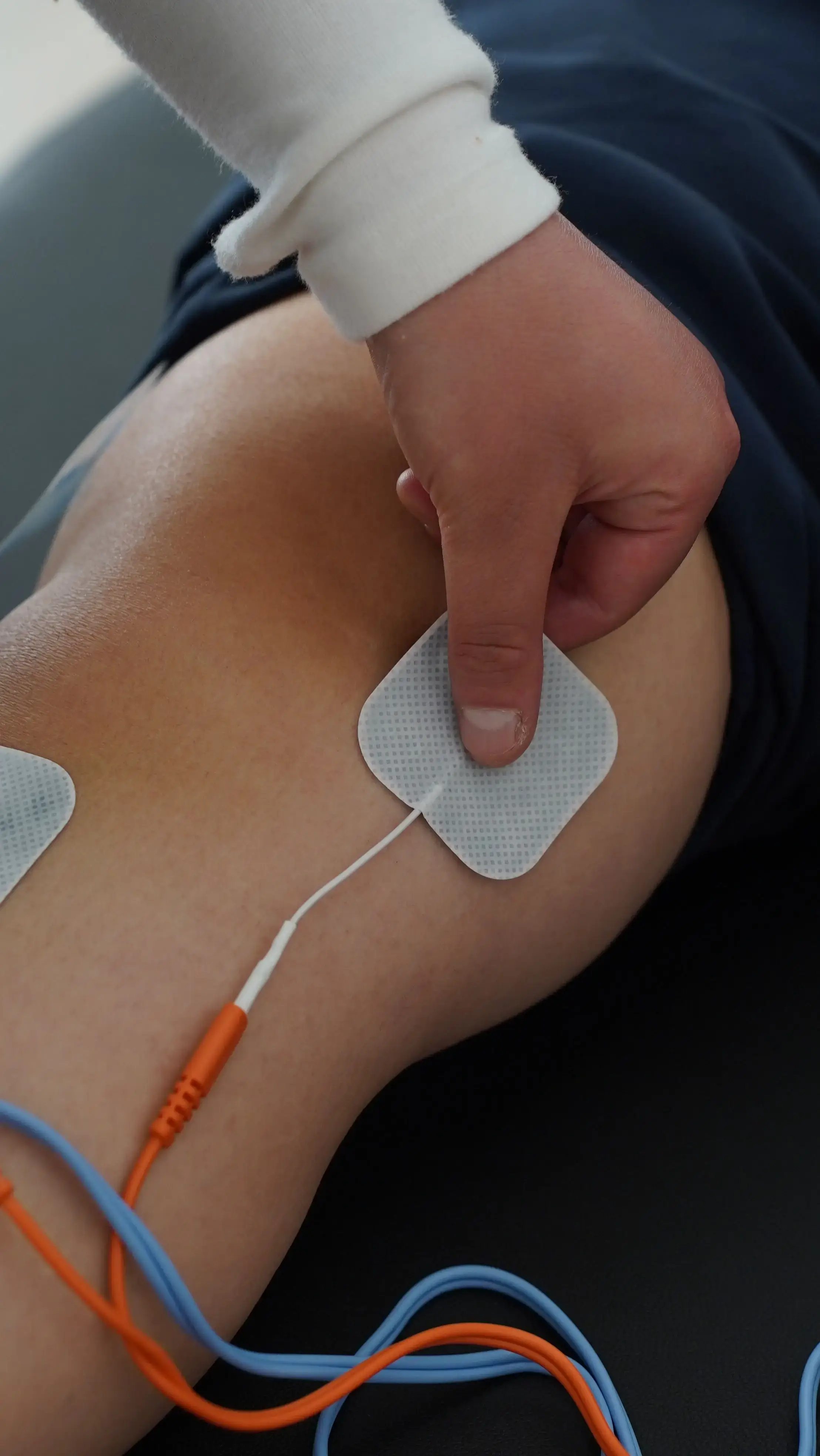
Fast relief for acute, sharp pain, with a comfortable tingling sensation.
Diadynamic currents combine low-frequency pulses with an analgesic effect, especially useful for acute, sharp pain that interferes with daily activities. Many patients notice a difference during the very first session.
Price: 10,00 €10 Sep 2026: 10,00 €
How it works
Diadynamic currents combine low-frequency current pulses with an analgesic (pain-relieving) effect that also reduces local inflammation. They're especially effective for acute, sharp pain that interferes with daily activities.
The treatment lasts about ten minutes, with a comfortable tingling or pulsing sensation — many patients notice a difference during the very first session.
Diadynamic currents fall under the broader electrotherapy family. More continuous modalities like ultrasound work slower and deeper; diadynamic currents act faster, more focused on acute, sharp pain than on long-standing inflammation.
Treatment steps
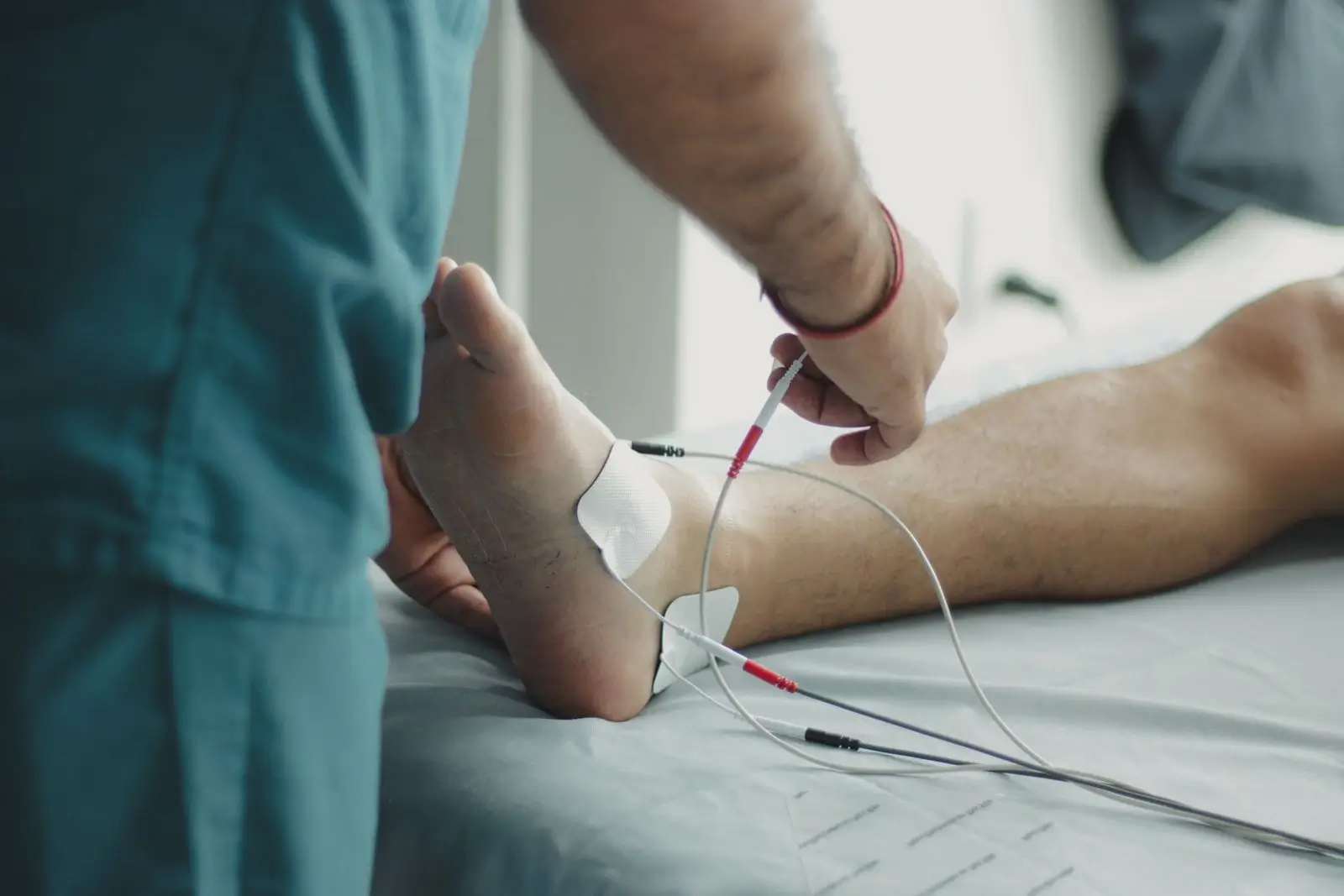
- 1Placing electrodes on the painful area
- 2Applying a combination of current pulses suited to the type of pain
- 3A treatment lasting about ten minutes
Who it's for
Frequently asked questions
How quickly will I feel relief?
Many patients notice a difference during the very first session.
Is it painful?
No, it feels like a comfortable tingling or pulsing, not pain.
How many sessions are needed?
For acute pain a few sessions are often enough; for more stubborn cases the therapist suggests a short series.
Can diadynamic currents be combined with other modalities?
Yes, they're often combined with ultrasound or manual therapy for a longer-lasting effect.
Are there contraindications for diadynamic currents?
Yes. We don't use diadynamic currents on patients with a pacemaker or other implanted electronic device, during pregnancy, with active deep vein thrombosis, or directly over metal implants at the treatment site.
Also worth reading
Ready to book an appointment?
A private clinic without long waiting lists, with an individual approach for every patient.