
CPM (Kinetek)
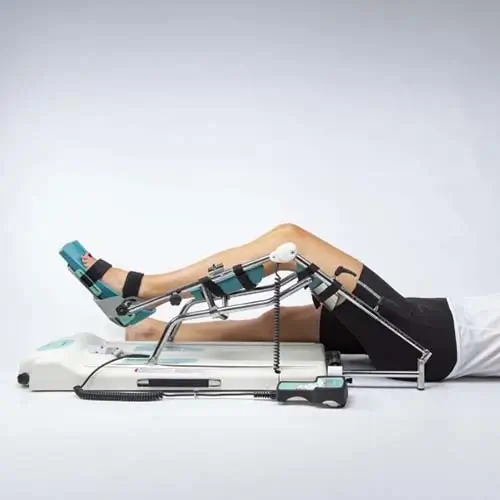
Passive, continuous joint motion for a safer return to mobility after surgery.
CPM (Kinetek) slowly and continuously moves the joint through a safe range of motion without active muscle work. It's often the first line of care in the early recovery phase after knee surgery, when the joint is still stiff and sensitive.
Price: 10,00 €10 Sep 2026: 10,00 €
How it works
CPM (Kinetek) therapy slowly and continuously moves the joint through a safe range of motion, without active muscle work — it's often the first line of care in the early recovery phase after knee surgery, when the joint is still stiff and sensitive.
The device moves the joint within a safe range, gradually increasing it across a series of sessions. The patient doesn't need to actively strain the muscle, which is ideal in the early, sensitive recovery phase.
CPM is most often used as part of a broader post-surgical rehabilitation program, but it can also be booked on its own if a joint is stiff after a longer period of rest.
Treatment steps
- 1Positioning the joint in the device for passive motion
- 2Gradually moving it through a safe, controlled range
- 3Tracking progress across a series of sessions
Who it's for
Also available in a package
Often combined with
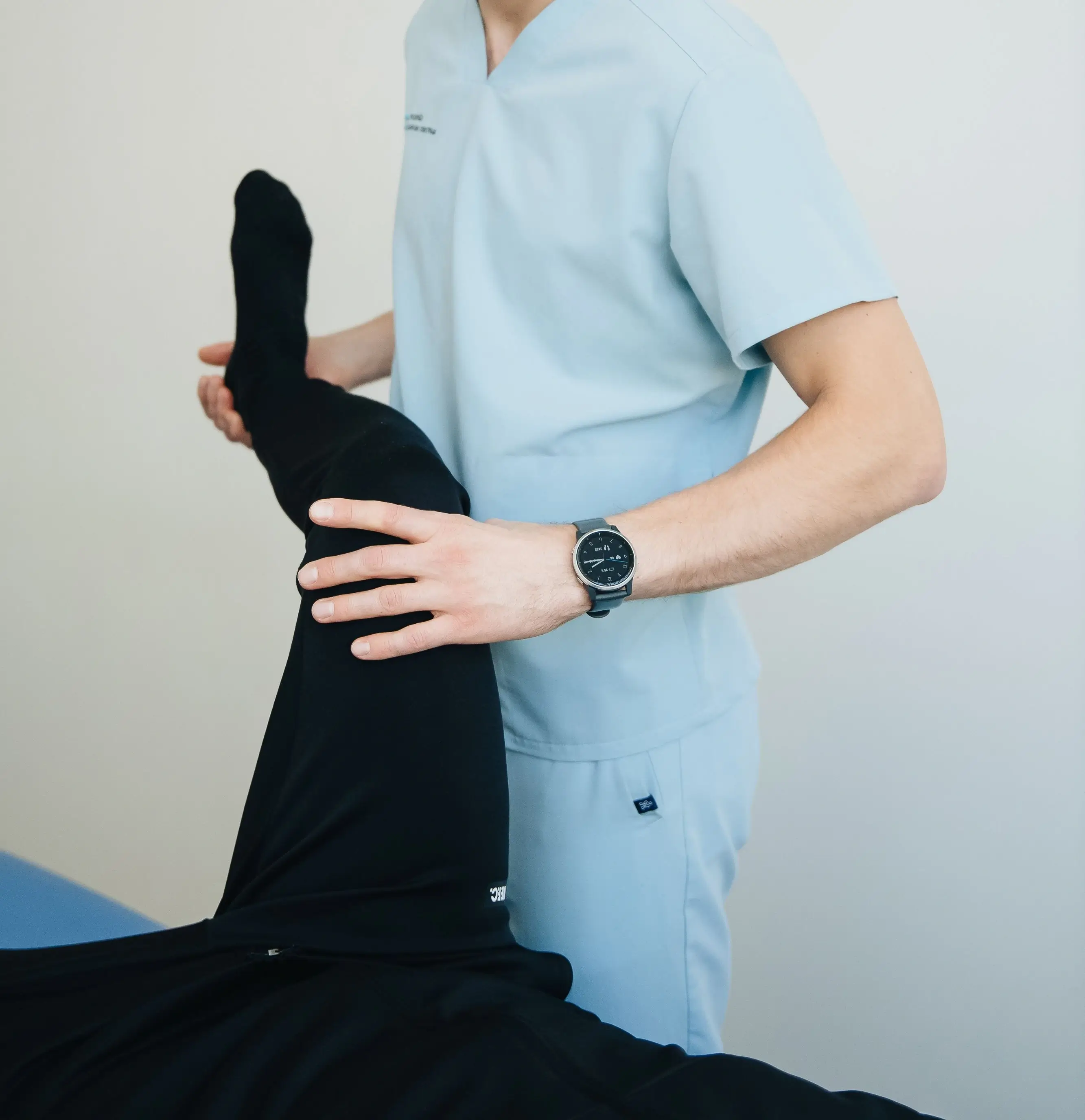
Post-surgical rehabilitation
A structured, phased recovery program after knee, hip, or other joint surgery.
170,00 €10 Sep 2026: 170,00 €
Individual therapeutic exercise program
Guided, individualized exercise sessions with a therapist for strength and mobility after injury, surgery, or chronic conditions.
20,00 € / 30,00 €10 Sep 2026: 20,00 € / 30,00 €Frequently asked questions
Does CPM therapy hurt?
No, the motion is passive and within a comfortable range.
When is it used?
Most often in the early recovery phase after joint surgery, as recommended by your surgeon or therapist.
Does CPM replace exercise?
No, it complements it — CPM restores range of motion, while exercise builds strength.
How long does one session take?
Depending on the therapist's recommendation, usually twenty to thirty minutes of passive motion.
Are there contraindications for CPM?
Yes. We don't use CPM with unstable post-surgical fixation, an active infection at the surgical site, or pain that worsens during movement instead of easing. The therapist checks the joint is ready for passive motion before starting.
What post-surgery symptoms need an urgent call to a doctor instead of coming in for CPM?
Sudden swelling, redness, or calf pain (a possible sign of blood clot), fever, wound drainage or an unpleasant smell, or sudden, severe pain that isn't easing — contact a doctor or emergency services right away, don't wait for your next session.
Also worth reading
Ready to book an appointment?
A private clinic without long waiting lists, with an individual approach for every patient.